Accessibility Guidelines and Testing Framework

Accessibility
Inclusive Design
Design Guidelines
Requirements
Type of Project:

Design Framework

Overview

The project translated accessibility requirements into practical design guidelines and repeatable test protocols for handheld devices. It covered visual disabilities and physical hand disabilities, defining both what to design for and how to verify it. The result was a structured methodology with defined equipment, procedures and pass criteria that any team member can apply to validate contrast, text size, grip, button interaction and touchscreen use.
Process

The work combined guideline synthesis with hands-on protocol development.

  • Compiled design guidelines for visual disabilities, covering high-contrast markings, large tactile buttons, adjustable display settings and audio cues.
  • Compiled guidelines for hand disabilities, covering ergonomic grip, weight balance, accessible controls and supportive accessories.
  • Mapped the main physical problem areas for conditions such as arthritis: thumb movement, pinching, gripping and tremors.
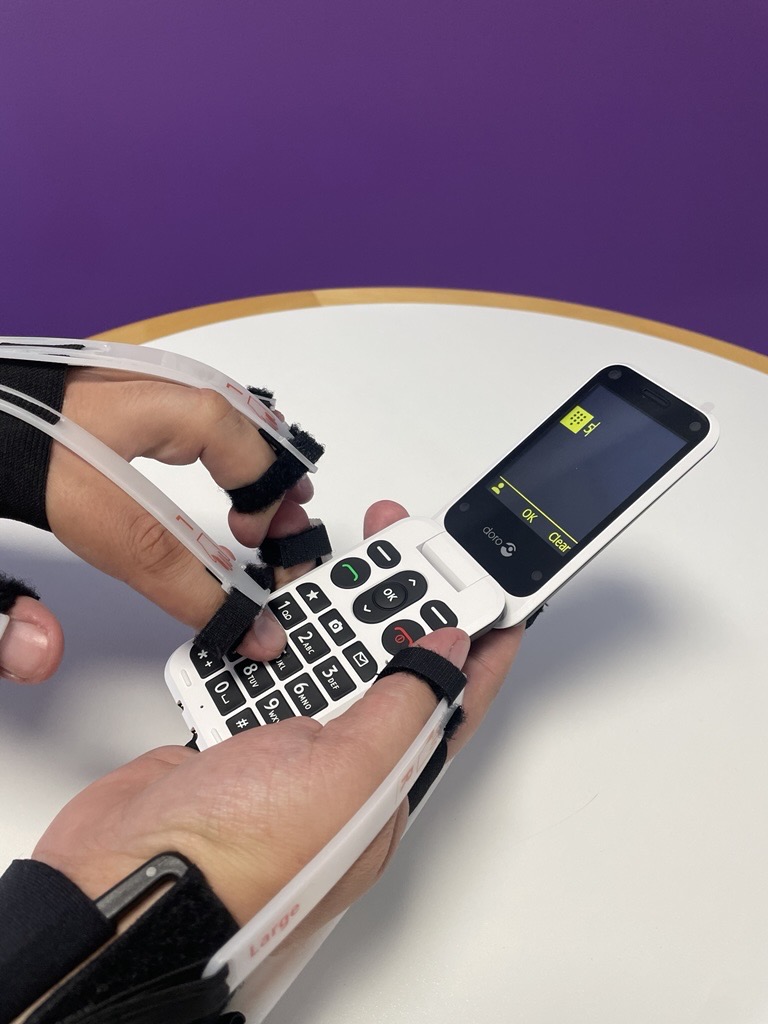
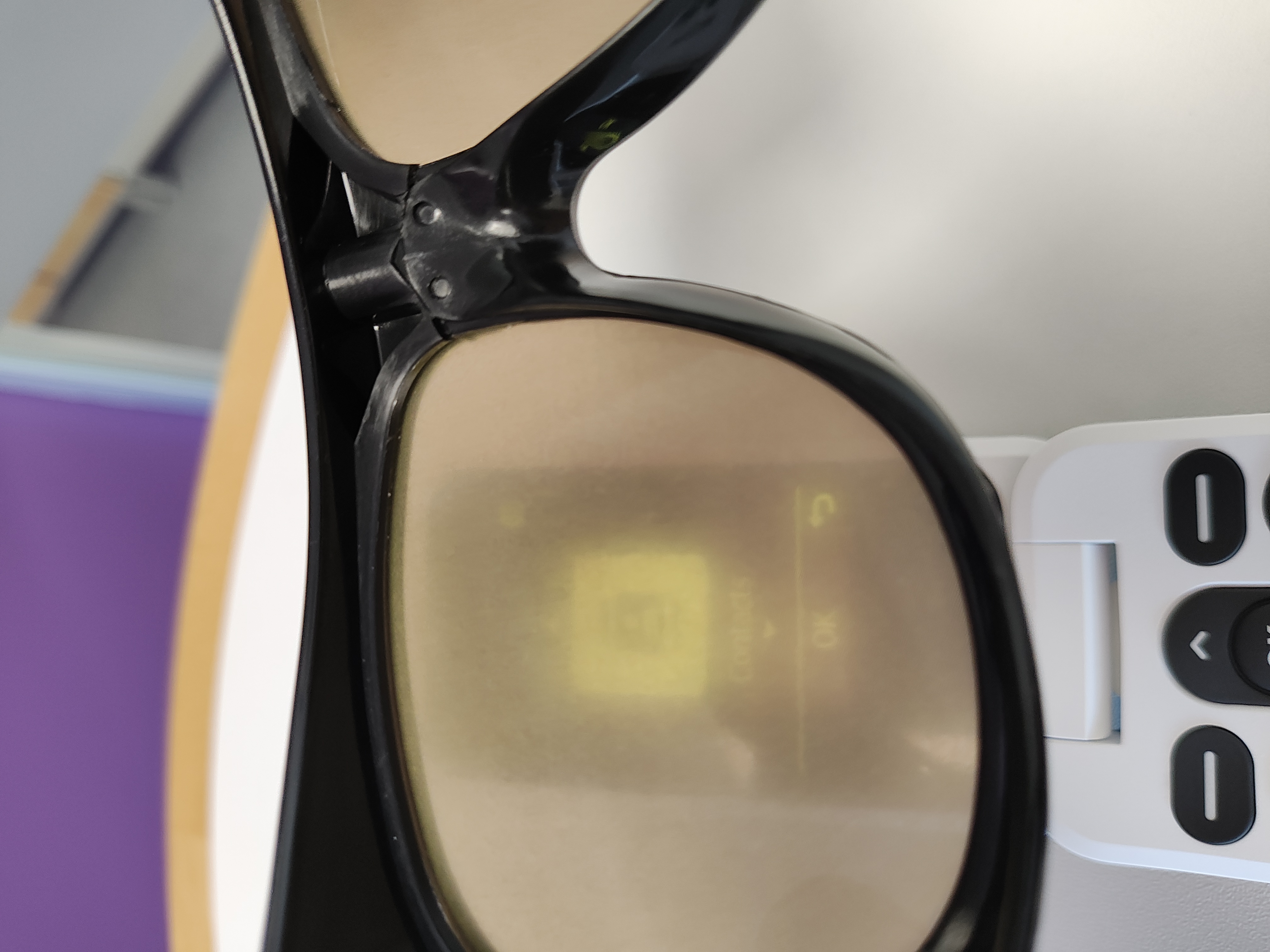
  • Selected simulation equipment: glasses replicating cataract, glaucoma and other eye conditions, and gloves simulating reduced hand function and tremors.
  • Defined controlled test procedures with specified lighting levels, viewing distances and durations.
  • Set explicit pass and fail criteria for each test, tied to usability for people with medium to high disability levels.
  • Documented safety constraints for tremor simulation equipment.
outcomes

The framework made accessibility verifiable early in the design process.

  • Visual tests assess whether labels, icons and UI elements remain distinguishable under simulated cataract and readable under simulated glaucoma at realistic distances.
  • Physical tests assess whether core actions like picking up, opening and pocketing a device are possible with restricted hand function.
  • Touchscreen tests reveal whether UI targets are large and spaced enough for users with tremors.
  • Criteria link failures directly to design changes: contrast, text size, target size, spacing and ergonomics.

‍

Check out more projects

View Projects
View Projects